Application: DAF dosing control

Effective dosing control can improve DAF performance, reduce chemical costs, and help you get more from your equipment. Quadbeam's multi-beam suspended solids sensors are a reliable way to achieve this thanks to their accuracy and repeatability.

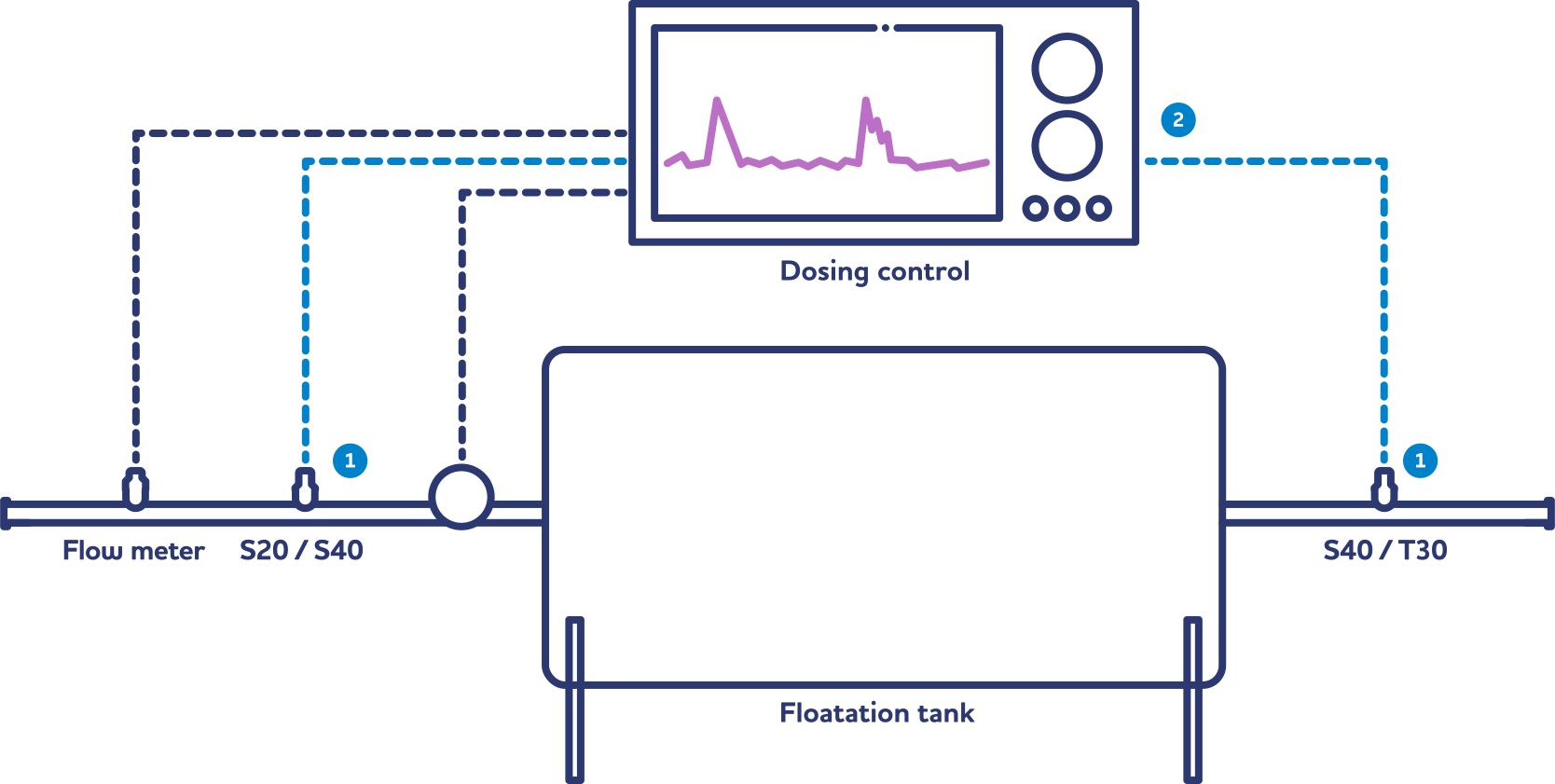
By measuring the solids concentration in the feed line, you can automatically adjust dosing in real time to match the actual load. A second sensor on the treated water output confirms the DAF is performing as expected.

Typical applications include food processing, meat processing, rendering plants, paint manufacturing, and other industrial operations with high-solids wastewater streams. In these harsh environments, Quadbeam's self-compensating multi-beam design handles fouling and contamination that would cause single-beam sensors to drift.

How to use the Quadbeam sensor

1

Install the sensor in the feed line and treated water output.

2

For connection to the plant control systems the MXD73 and MXD75 provide a 4-20mA output. The AIO sensors have both 4-20mA and Modbus RS485.

A sensor to suit you

The range of Quadbeam sensors suits different applications, conditions, concentrations, and products. For DAF dosing control:

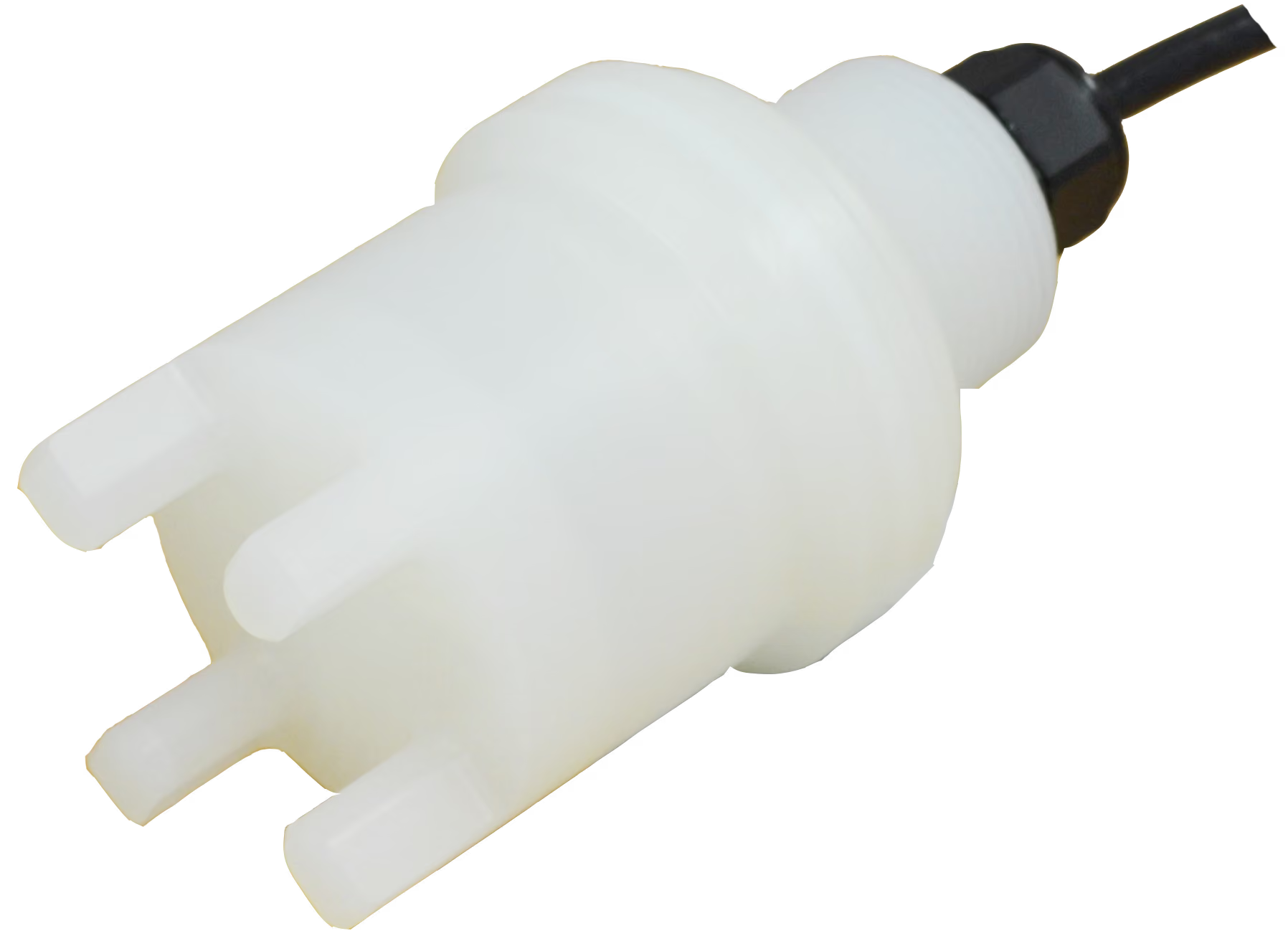
The S40-IMM is often used in the feed line to measure incoming solids concentration for dosing control.
The S40-IMM is often used in the treated water output where solids concentrations are higher.
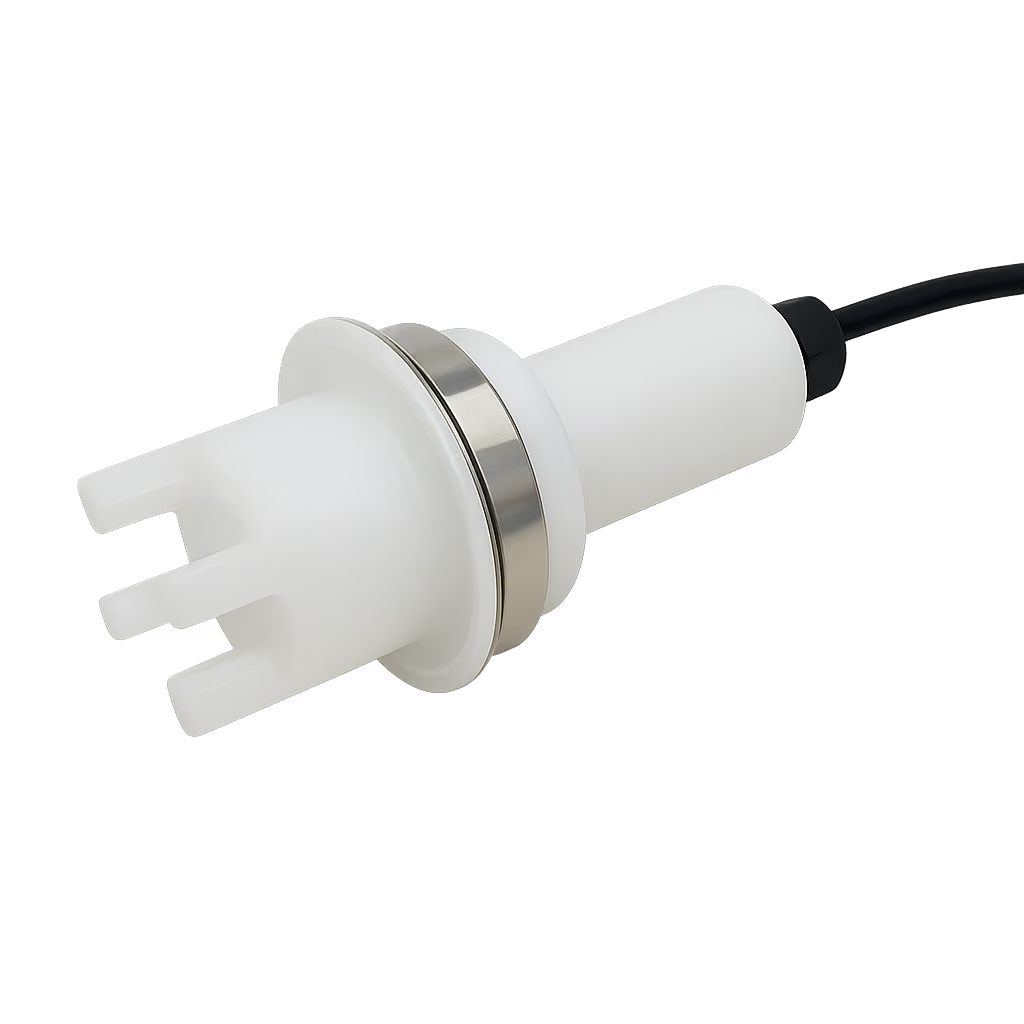
The T30-IMM is often used in the treated water output where lower concentrations require turbidity-level sensitivity.
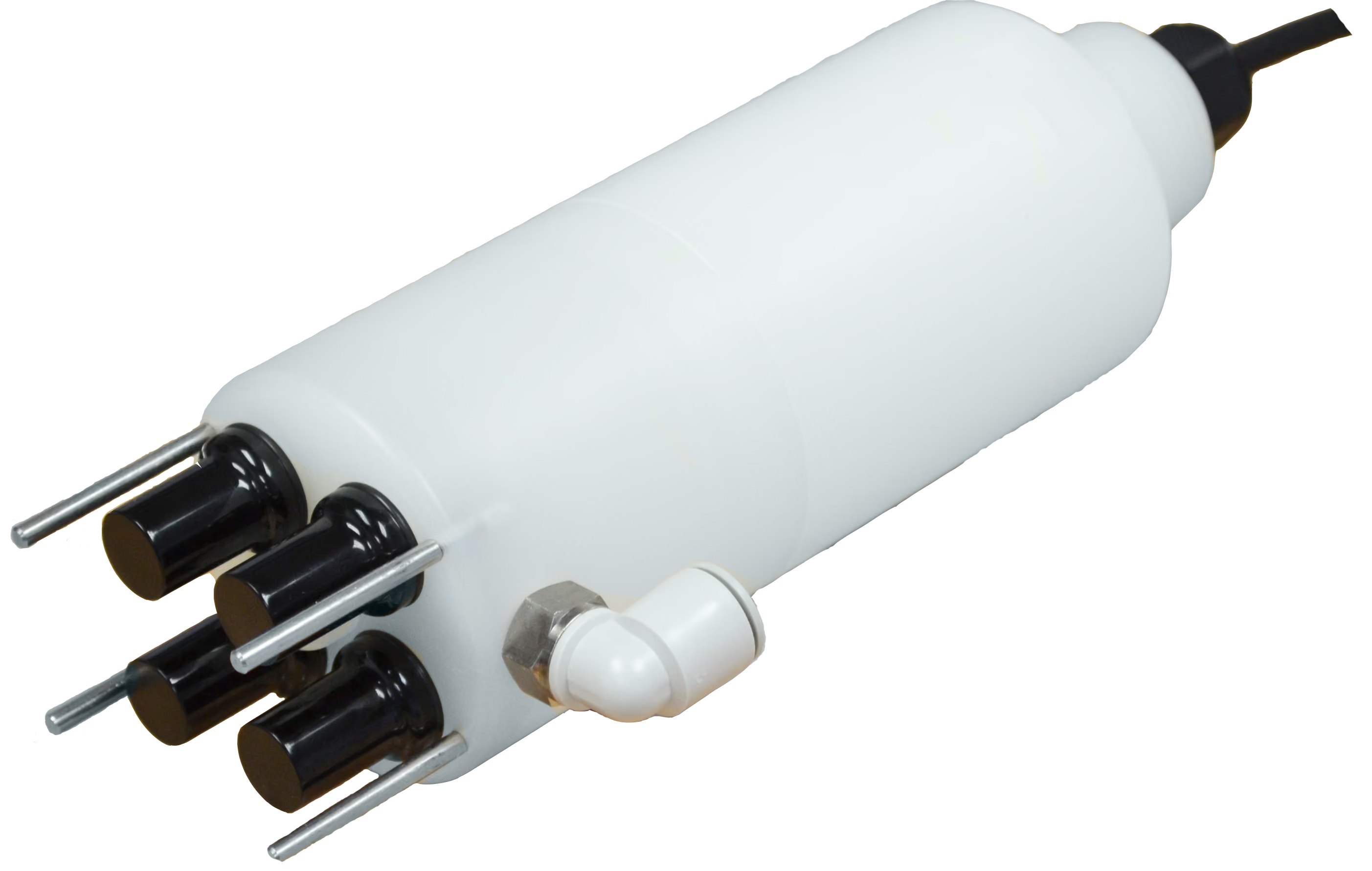
The S40-3HY AIO provides direct 4–20mA and Modbus output without a separate transmitter — ideal for simpler installations.

S20-IMM Sensor

T30-IMM Sensor

S40-3HY AIO Sensor

(the measuring range will vary according to media and particle characteristics)

Find the right sensor

Why you can rely on Quadbeam sensors

The range of Quadbeam sensors suits different applications, conditions, concentrations, and products. The most commonly used sensors for DAF dosing control are the S40 and T30, in the immersion style.

Listening to nature’s voice

Self-compensating

Quadbeam sensors are incredibly accurate because they’re multi-beam, so they can eliminate measurement error that single-beam sensors can’t cope with. Two LEDs fire near-infrared (NIR) light at two detectors to generate multiple light intensity measurements that represent the suspended solids concentration. These measurements are combined into a ratio-metric algorithm that self-compensates for common sources of measurement error like contamination or component ageing.

Listening to nature’s voice

One-piece body

Quadbeam sensors are also tough because they’re made from a one-piece polymer body, with no glass lenses that could leak or break.

Listening to nature’s voice

Simple to use

Quadbeam sensors are simple to calibrate on-site, so they give results that are directly relevant and meaningful to the site. There are easy calibration instructions here, or contact us for assistance.

Listening to nature’s voice

Built for harsh industrial environments

In demanding industrial wastewater applications — where process streams can contain fats, oils, and other sticky contaminants — the multi-beam design and rugged construction keep measurements reliable with less cleaning and less downtime than conventional sensors.

Find out more

Results

Chemical dosing optimisation: Automating chemical dosing based on real-time solids measurement means you can match dosing to the actual incoming load — reducing chemical costs when loads are light and maintaining treatment quality when they're heavy. This replaces fixed dose rates that inevitably over-dose or under-dose as conditions change.

Process stability: The repeatability of Quadbeam's multi-beam technology is particularly valuable for dosing control. Consistent, reliable measurement means your control system can respond to genuine changes in solids concentration, not sensor noise or drift. This leads to more stable DAF operation with less operator intervention.

Performance monitoring: A second sensor on the treated water output gives you continuous confirmation that the DAF is performing as expected. If solids removal drops, you'll know early — allowing you to investigate and correct issues before they become costly or affect downstream compliance.

Reduced maintenance: In harsh industrial wastewater environments with fats, oils, and sticky contaminants, Quadbeam's self-compensating multi-beam design stays accurate for longer between cleans. This means less sensor maintenance, fewer false readings, and more time focused on running the plant.

For help or to find out more

If you want to discuss your installation or have another question, or just want to find out more, contact us. You can also see our full product range here, and access data sheets, manuals, and technical information.
Download PDF